
For some, Noah Kahan sits at the top of their annual Spotify Wrapped. For others, the name is completely unfamiliar. Either way, the breakout star’s journey to fame is worth paying attention to. Kahan’s lyrical genius, raw vocals and humble character set him apart in the music industry, offering a refreshing sense of authenticity that many listeners crave.
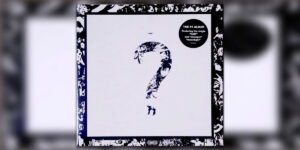
View album ↓
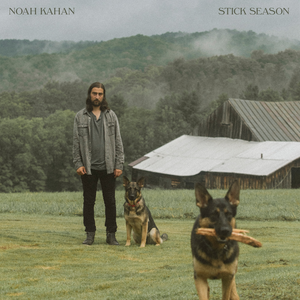
Noah Kahan, a Vermont-born folk-pop singer-songwriter, has become one of the most recognizable voices in music following the breakout success of his 2022 album “Stick Season.”
What began as TikTok covers, strumming the guitar in his childhood bedroom, has grown into sold-out shows at some of the nation’s most iconic venues.
According to an interview with Atwood Magazine, Kahan entered the industry at 18, deferring his admission to Tulane University to sign with Republic Records.
His debut single “Young Blood” hit the charts in 2017, followed by a studio album called “Busyhead” in 2019.
Yet Kahan’s true breakthrough moment began with a viral TikTok. At the height of the Covid-19 pandemic and global lockdown, Kahan posted a video teasing the lyrics to an original song he called “Stick Season.”
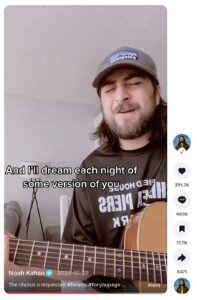
The post gained over 10.7 million views, and fans were desperate to hear more.
click to watch →
“Stick Season,” the single, was officially released in July 2022, spearheading a studio album the following October.
The track began with 14 songs but has since expanded to 30 in the expanded edition, featuring collaborations with Post Malone, Hozier, Gracie Abrams and other high-profile artists.
No. 1 "Stick Season" - the single
In the famous title track, “Stick Season,” Kahan reflects on the transitional period between Vermont’s colorful fall and its first snowfall.
In an interview with Apple Music’s Hanuman Welch, he describes the season as “super depressing,” recalling how the harsh New England temperatures intensified feelings of loneliness and claustrophobia in his rural hometown.
Kahan draws upon this imagery throughout the album, but specifically reflects on a broken relationship in “Stick Season,” the single.
As you promised me that I was more than all the miles combined
You must have had yourself a change of heart like halfway through the drive
Because your voice trailed off exactly as you passed my exit sign
Kept on drivin’ straight and left our future to the right
As he struggles to cope with the loss of his significant other, he describes feelings of depression and isolation that reflect the eerie Vermont weather.
And I love Vermont, but it’s the season of the sticks
And I saw your mom, she forgot that I existed …
Now you’re tire tracks and one pair of shoes
And I’m split in half, but that’ll have to do
In a 2023 interview with Grammy.com, Kahan expressed the significance of the viral hit.
“It opened my eyes to the audience that I didn’t realize was there … It let me look at folk music and storytelling as a bigger focus in my life instead of something that I did for fun or in the privacy of my home.”
No. 2 "Growing Sideways"
Kahan continues this theme of vulnerability in the album by peeling back another layer in “Growing Sideways.”
According to Genius, “Growing Sideways” “offers a deeply introspective exploration of themes such as mental health, emotional numbing, and the slow, nonlinear process of healing.”
Kahan begins by revisiting his experiences with therapy. Rather than making genuine progress, he recalls simply going through the motions while continually struggling with his identity.
So I took my medication and I poured my trauma out
On some sad-eyed middle aged man’s overpriced new leather couch
And we argued about Jesus, finally found some middle ground
I said, ‘I’m cured’
Kahan shares the story behind the track in an interview with CBC.
“The truth is, I was going to therapy, but I wasn’t in therapy. I was just putting on a performance, and I did that for a long time,” Kahan said. “So I was writing about that feeling of, like, maybe I don’t have any idea who I am because I’ve just been dancing around it for so many years.”
Rather than taking the time to work through difficult emotions and experiences, including generational trauma, substance abuse, and mental health disorders, Kahan turned to avoidance and numbness as a coping mechanism.
But I ignore things, and I move sideways
‘Til I forget what I felt in the first place
At the end of the day I know there are worse ways
To stay alive
This maladaptive response led Kahan to feel “behind” his peers, stuck in a cycle of pain rather than moving forward.
No. 3 "Call Your Mom" (extended album)
Although I personally discovered Noah Kahan through “Stick Season,” the single, it wasn’t until listening to “Call Your Mom” that he became my favorite artist.
The track first appeared on “Stick Season (We’ll All Be Here Forever),” an extended version of the original album including seven new songs.
While most songs in the album deal with difficult subjects, Kahan revealed on X that “Call Your Mom” carries a particularly emotional weight for him.
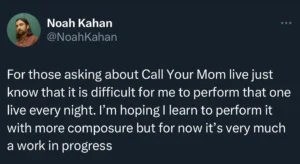
The post was shared just one week after the song’s release in June 2023 while Kahan was actively on The Stick Season Tour. “Call Your Mom” was not included in the setlist that night in Bonnaroo, Tennessee, according to Setlist.fm.
Genius describes “Call Your Mom” as “a heartfelt ballad of unconditional support for those living with mental health issues, particularly depression.”
Oh, you’re spiralin’ again
The moment right before it ends, you’re most afraid of
But, don’t you cancel any plans
‘Cause I won’t let you get the chance to never make them
In the song, Kahan depicts a close friend battling depression. In a moment of crisis, he becomes a lifeline, offering comfort and support over the phone until the urges subside.
Stayed on the line with you the entire night
‘Til you let it out and let it in
Kahan reminds his friend that they are not alone and draws from his own experiences with mental health. He encourages them to hold onto hope, vowing to call their mother if necessary to keep them safe.
Don’t let this darkness fool you
All lights turned off can be turned on …
Oh, dear, don’t be discouraged
I’ve been exactly where you are
I’ll drive, I’ll drive all night
I’ll call your mom
Not only do the lyrics carry an emotional weight of their own, but Kahan’s vocals and instrumentation amplify the message to make the song even more powerful.
No. 4 "The View Between Villages"
Kahan concludes the album with a full-circle moment, as he returns to his hometown of Strafford, Vermont, after spending time away.
He describes driving through familiar landmarks, as nostalgia and childhood memories gradually resurface.
For a moment, Kahan describes a rare feeling of peace and contentment.
According to Genius, “The View Between Villages” “is the first song to state that he is objectively, presently happy … juxtaposing the constant themes of depression, grief, anger, numbness, heartbreak, and isolation present in the rest of the album.”
It’s just me and the curve of the valley
And there is meaning on Earth, I am happy
Yet the moment is short-lived, as Kahan confronts the complicated realities of returning home.
Passed Alger Brook Road, I’m over the bridge
A minute from home but I feel so far from it

While the landscape remains largely unchanged, Kahan is no longer the same child who grew up there, leaving him consumed by feelings of anger and detachment.
It’s all washin’ over me, I’m angry again
The things that I lost here, the people I knew
They got me surrounded for a mile or two
In the end, Kahan decides to turn the car around, returning to his happy place to escape the pain.
The car’s in reverse, I’m grippin’ the wheel
I’m back between villages and everything’s stillKahan reflects on the song in an interview with Atwood Magazine, naming it his favorite piece.
“The song is about this path between South Strafford and Strafford, where it’s just a big valley and it’s so beautiful. And no matter what is going on in my life, whenever I drive on that path, I feel so happy.”
Not only are the lyrics sentimental, but the music parallels the emotional tension.
As Kahan passes Alger Brook Road in the story and nears his hometown, the music builds, transitioning from a simple acoustic melody to banjos, guitars and drums.
Finally, as Kahan returns to the valley, a gentle organ fades in, concluding the song with a restored sense of peace.
“I was really happy about being able to write a song that not only lyrically told a story, but musically told a story,” Kahan said.
﹍﹍﹍﹍﹍﹍﹍﹍﹍﹍﹍﹍﹍﹍﹍﹍﹍﹍﹍﹍﹍﹍﹍﹍﹍﹍﹍﹍﹍﹍﹍﹍﹍﹍﹍﹍﹍﹍﹍
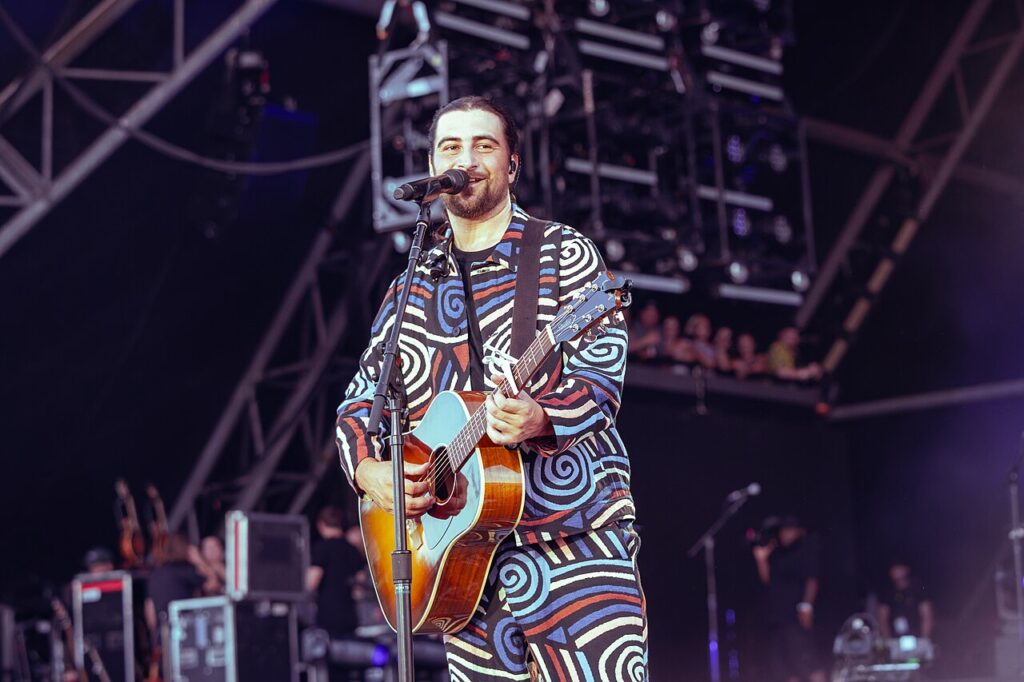
I was fortunate to attend a Noah Kahan concert in June 2024 at the Hollywood Casino Amphitheatre in Maryland Heights, Missouri.
While I have been to more concerts than I can count—from Taylor Swift to Pitbull to Tate McRae—none can compare to the deeply meaningful experience of seeing Noah Kahan perform live.
His deeply personal and relatable music left a lasting impression that extended beyond the typical lights, costumes or effects.
Unfortunately, I was not able to see Noah Kahan return to St. Louis for his “The Great Divide” tour in August 2026. Despite being held at Busch Stadium, tickets sold out almost immediately during the February artist presale.
While I am clearly not the only Noah Kahan superfan, his quirky, genuine and humble personality has remained unchanged, regardless of fame or fortune.
Taylor Weatherby, former editor of GRAMMY.com, noted in a 2023 feature story that “His humility is a large part of his appeal … which carries into his folk-pop music. It’s matched with extreme vulnerability, as Kahan has been open about his struggles with mental health.”
In fact, in March 2026, Netflix released a documentary entitled “Noah Kahan: Out of Body,” where Kahan returns to his Vermont roots.
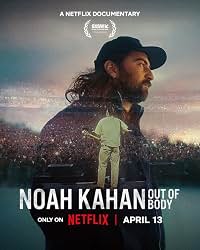
The film begins with Kahan’s double-header performance at Fenway Park in Boston, Massachusetts.
Despite being at the height of his career, Kahan reveals that his mental health has taken a downward turn.
As he grapples with writer’s block and the pressure to match his past success, Kahan visits his hometown in Strafford, Vermont, where his music career began.
Viewers are given intimate access to Kahan’s personal life, hearing from his wife, Brenna, close friends and family members.
The film reveals details about Kahan’s complicated relationship with his father, who was involved in a serious accident when Kahan was a child that resulted in a traumatic brain injury.
Kahan also opens up for the first time about his struggles with disordered eating and body dysmorphia.
According to an article by Holler, a digital music platform, “a recurring theme throughout ‘Out of Body’ is how, just because Kahan is brilliant at describing pain, it doesn’t mean he’s somehow found the solution to it.”
Noah Kahan is more than a talented singer, songwriter and musician. His ability to turn personal struggles into vulnerable and relatable music has captured millions of listeners across the world.
From an unknown artist on TikTok and SoundCloud to a Grammy-nominated performer with 24 platinum certifications, Kahan’s story shows that success does not erase the struggles that inspired the music in the first place.
Behind the fame and recognition lies an ordinary kid from Vermont who fell in love with music as a way to make sense of difficult feelings.
His story reminds those battling mental health challenges that they are not alone. There is power in vulnerability, turning pain into a source of strength, hope and connection.
If you or someone you know is struggling with their mental health, help is available. The 988 Suicide & Crisis Lifeline provides free, confidential support 24/7 by calling or texting 988. For help finding mental health treatment and support services, contact SAMHSA’s National Helpline at 1-800-662-HELP (4357) or visit FindTreatment.gov.