

This article explores the divisive nature of politics presented on social media and a call to share the truth– but do so with compassion and kindness for those with different political opinions from your own.
If I’m being honest, I am terrified of politics.
This fear of mine is mainly due to the divisiveness that seems to inevitably come with them.
If you haven’t noticed, politics can be a very polarizing topic in American society.
According to a Pew Research Center article, “Today, 55% of Democrats and 58% of Republicans view the other party in deeply negative terms.”
“TODAY, 55% OF DEMOCRATS AND 58% OF REPUBLICANS VIEW THE OTHER PARTY IN DEEPLY NEGATIVE TERMS.” –PEW RESEARCH CENTER
The same article tells us that while 30% of people felt enmity with the opposing political side in 1964, this number reached 80% in 2012.
The stigmas behind opposing political sides can be isolating and socially detrimental.
Enmity and negativity does not add unity and peace to our nation.
Media outlets and social media platforms allow for political opinions to be voiced, debated and broadcasted for millions of people to see.
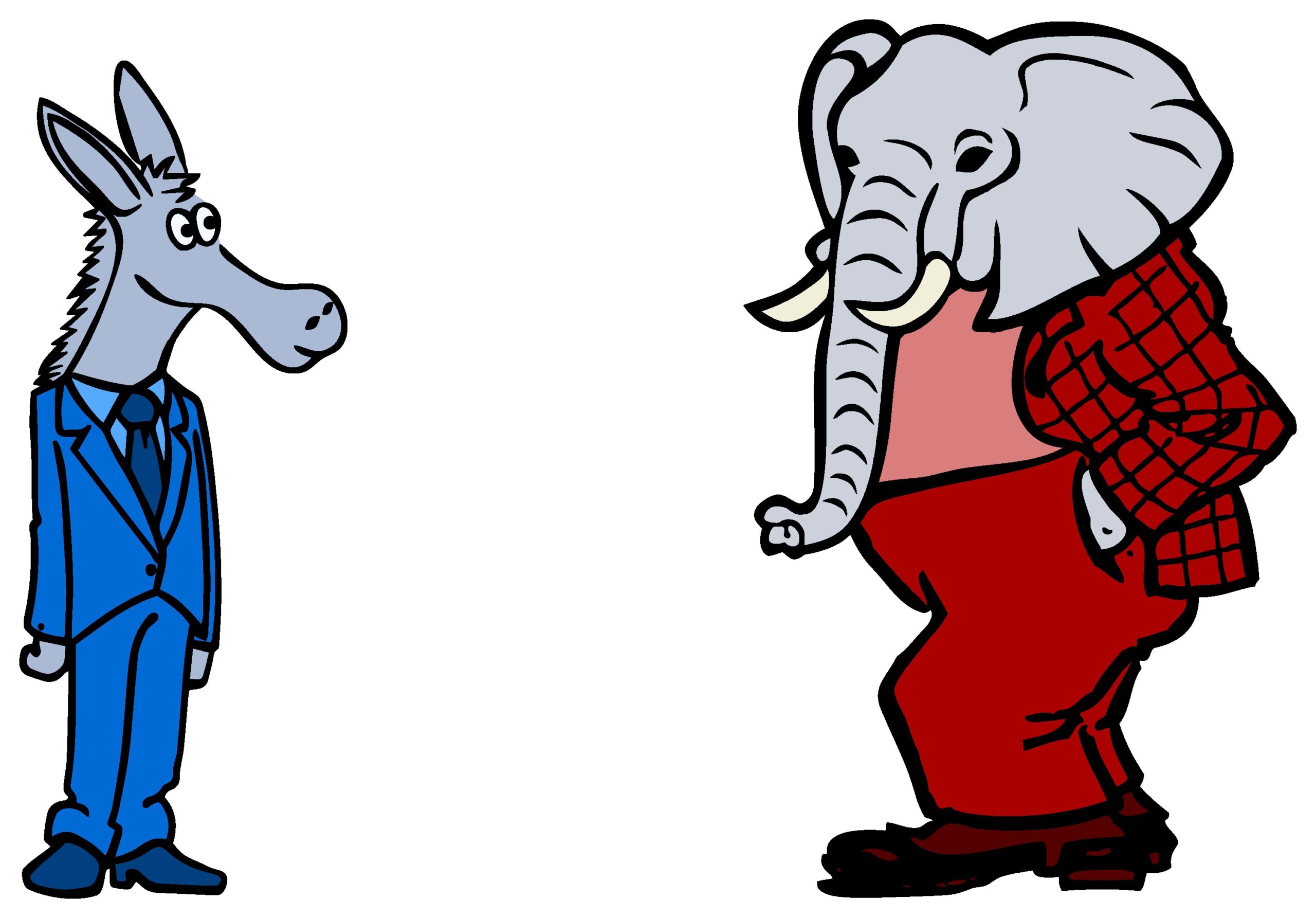
While this isn’t inherently wrong, it becomes bad when people with different political views refuse to interact with or treat one another as valuable humans.
In a 2021 Oxford Academic journal article, the authors stated that political polarization is rising in the U.S. and around the world.
The media has become more fragmented and partisan, particularly on social media, based on the article.
Meanwhile, polarization can have some perks.
“Higher levels of polarization can be beneficial for society – predicting higher levels of political participation, and perceptions of electoral choice,” as described by the Oxford article.
The article then explains the negative effects of polarization in the political realm.
“However, political polarization can also be bad for democracy, increasing the centralization of power, congressional gridlock, and making citizens less satisfied.”
Therefore, political polarization can divide the nation further, from creating barriers among the people it serves to dividing the government who creates the laws.
Other consequences of political polarization include “an unwillingness to interact with and dehumanization towards political adversaries.”
Noah Lloyd suggested in a Northeastern Global News story that social media creates higher levels of political polarization.
A 2022 segment of the television broadcast, 60 Minutes, said that “social media is a showcase of our anger” between the prominent political sides: Republicans and Democrats.
The video reveals that social media platforms reward divisiveness and attacks on political opponents. The proof is in the numbers.
A study of Twitter (now X), demonstrated that “each individual term referring to your political out-group increased the odds of that post being retweeted or reshared by 67%,” said Tristan Harris, an American technology ethicist, in the 60 Minutes segment.
In other words, posts with language targeting the opposing political party receive a much higher rate of interaction.
My Thoughts
People will inevitably have different opinions; that’s just part of being human.
However, the problem arises when these differences lead to hate.
At the end of the day, no one will agree on everything.
We can’t run from everyone with different opinions. This wouldn’t be healthy for us or our society.
We can politely listen to others, agree or disagree with them, and treat everyone as a valuable member of society.
So before we tweet, comment or debate, let’s ask ourselves if we are politely disagreeing or degrading another person.
Republican, Democrat or anything in between, we are all people.
Therefore, we must respect each other, show compassion and speak the truth in love.
*Cover image created with Canva, by Kailey Schmidt
Sources:
academic.oup.com/anncom/article/45/3/188/7912664
m.youtube.com/watch?v=WLfr7sU5W2E&pp=ygUnU29jaWFsIG1lZGlhIGFuZCBwb2xpdGljYWwgcG
9sYXJpemF0aW9u0gcJCTcMAYcqIYzv
news.northeastern.edu/2025/11/27/social-media-political-polarization-research/