
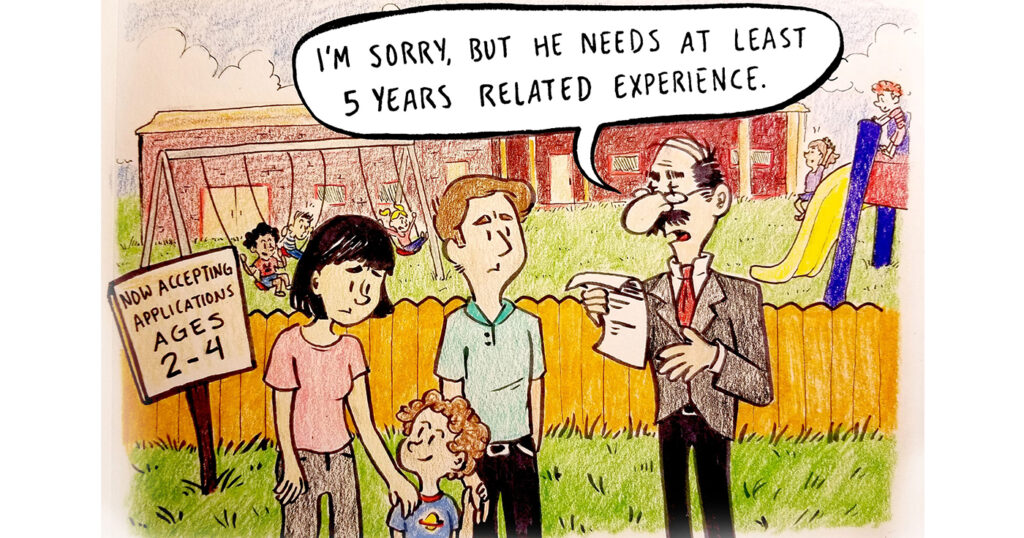

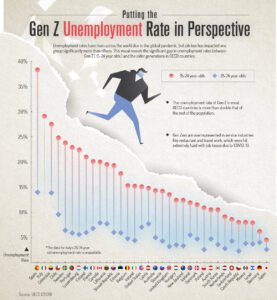
With unemployment rates among college graduates at an all-time high, many employers have written off Gen Z as lazy, entitled or unwilling to put in the work necessary to succeed. Meanwhile, young adults are entering a workplace unlike anything previous generations have seen before. Artificial intelligence has redefined the hiring process and diminished entry-level jobs, leaving qualified young workers stranded and jobless.
As an increasing portion of Generation Z, born between 1997 and 2012, reaches their 20s, graduates college and enters the workforce, many are facing unexpected difficulties.
For generations, young adults have been taught that if they pursue higher education and earn a degree, they will be guaranteed a job. But that is no longer the case.
Long gone are the days of door-knocking, cold-calling and getting hired on the spot. Now, platforms like LinkedIn, Indeed and even artificial intelligence hold the keys to employment.
Job seekers can submit hundreds of applications before landing a single interview. LinkedIn, for one, receives an average of 11,000 applications per minute, an increase of 45% from previous years.
Overwhelmed with volume, many companies have turned to AI to speed up the hiring process. However, many applicants report uncomfortable and impersonal experiences.
Glen Cathey, an applied AI and recruiting expert, shared on LinkedIn that “nearly 40% of job seekers who’ve been requested to interview with AI have walked out of the hiring process because of it.”
Cathey referenced Sharawn Tipton, chief people officer of Greenhouse, who said candidates “aren’t walking away from AI. They’re walking away from bad experiences caused by bad AI. They’re reacting to a feeling of being processed rather than considered.”
A 2026 Resume Genius survey found that 87% of organizations admitted to using AI somewhere in the hiring process.
Similarly, HiringThing, a recruiting software company, found that some initial AI screenings “can reject a resume in as little as 0.3 seconds,” while 75% of applications never reach human review.
On the other hand, some companies have resorted to “ghosting,” or ceasing communication without warning or explanation.
A 2026 survey of more than 1,000 U.S. workers conducted by LiveCareer found that 45% reported being ghosted by a company during the hiring process, and 48% said they would not reapply.
So, who is to blame—recruiters or applicants? Does Gen Z inherently lack the traits and skills necessary to survive in the workplace, or is the system failing to adapt to a rapidly changing economy?
An article by Nicole Precourt in Career Convergence argues that Gen Z faces a myriad of challenges, including a need for instant gratification, an anxious and fragile mind and deficient soft skills.
Precourt cites a 2024 Harris Poll in which 82% of employers said their younger hires “need additional support, time and training” to develop these skills.
A 2023 segment on the TODAY show reported similar concerns, suggesting the COVID-19 pandemic deprived Gen Zers of “key etiquette skills” such as answering emails, behaving in meetings and making small talk.
However, many individuals have taken to social media to challenge these allegations.
Hanna Horvath, a certified financial planner and financial psychology expert, revealed in a TikTok video that unemployment among college graduates is climbing as entry-level job postings become increasingly scarce.
Companies no longer need junior employees to perform basic or mundane tasks. Instead, AI can match or exceed the workload at little to no cost.
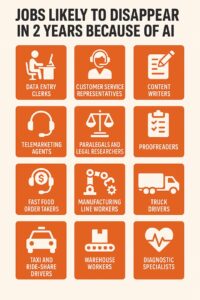
Horvath cautions that this strategy could actually harm the labor market in the long run, warning that the pipeline of future talent could disappear.
“People don’t understand that entry-level jobs provide so much more than an initial income. They also give young workers the chance to learn by doing,” Horvath said.
Maxwell Rhoe, another Gen Z TikTok creator (@maxwellrhoe), shared similar frustrations.
“The systems are failing on us … Going to college costs hundreds of thousands of dollars to then maybe get a job where you maybe are able to catch up to inflation in 20 years, pay off your student debt … It’s not working anymore,” Rhoe said.
Various credible sources support this logic, including FOX Business.
On a segment of “The Big Money Show,” data from Revelio Labs, a workforce intelligence database, revealed shocking statistics.
Since 2019, hiring rates for workers under 25 have dropped 45%, but for individuals 65 and older, these rates have risen 80%.
“Younger workers face fewer entry opportunities. This pattern is consistent with a labor market that is slowing, becoming more selective, and prioritizing experience over long-term potential,” according to a Revelio report.
The data further revealed that 61% of full-time entry-level positions now require three to five years of experience, contradicting the very definition of “entry level.”
Indeed, a global hiring platform, describes entry-level positions as those that “typically require minimal education, training and experience.”
While the odds may be stacked against current job hunters, the value of humanity cannot be replaced by technology. The world will always need living, breathing minds and bodies—Gen Z may simply have to adapt faster than most. They must discover what makes them uniquely qualified among a sea of applicants. The system may be flawed, but if anyone has the power to change it, it’s Generation Z.