
The Home Run Derby is a batting contest every year, in which Major League Baseball players compete against one another for a lofty prize and baseball fame. For some sluggers, the Home Run Derby is the beginning of a second-half surge. For others, it marks the start of a steep decline. While some long-ball hitters relish in the chance, others aren’t willing to take the risk.
The Home Run Derby takes place on the first night of the All-Star break. The competition is split into three rounds, and eight athletes compete.
The winner takes home the trophy and a $1 million prize.
In the first round, four winners move on to the semifinals, and those two winners move to the finals.
If either competitor hits two home runs that go 440 feet or more, the batter gets 30 bonus seconds to hit as many more home runs as possible.
While some derby champions have risen to career highs, others have fallen to career lows in the second halves of their respective years.
This article explores the post-derby performances of Jordan Walker, Bryce Harper, Aaron Judge, and Ryan Howard.
The sharp contrasts in productivity after the All-Star break have some sluggers questioning if competing in the Home Run Derby is worth the risk.
2026 Home Run Derby Champion Jordan Walker
a decline 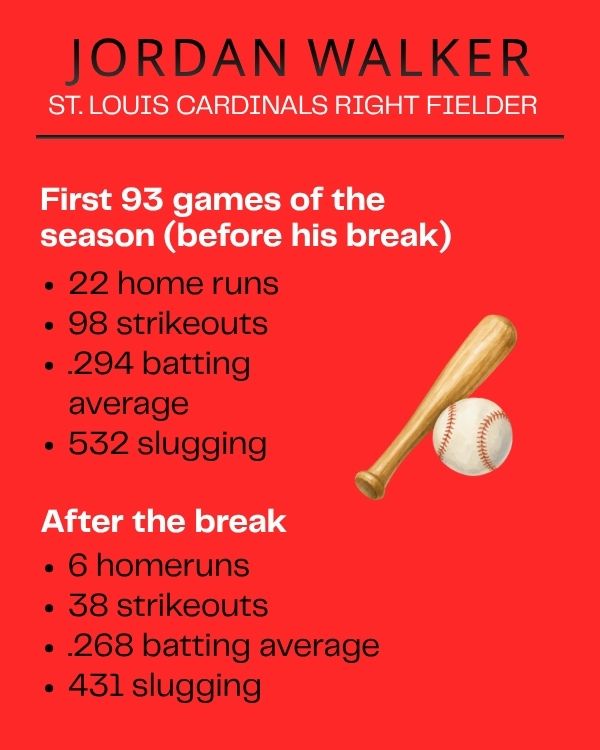
In his first 93 games of 2026, Walker was one of the Cardinals’ most productive hitters— hitting .294 with 22 home runs, 98 strikeouts and 74 RBIs.
After the All-Star break, however, Walker’s performance noticeably declined.
In 38 games, his batting average dropped 26 points to .268, recording just five home runs, 23 RBIs and 38 strikeouts.
On Walker’s path to the Home Run Derby, he went toe-to-toe against Phillie’s player Kyle Schwarber.
In this battle, Walker rattled off six home runs to win in a dramatic fashion, pulling ahead to make the score 12-11 and becoming the first Cardinal to win the Derby.
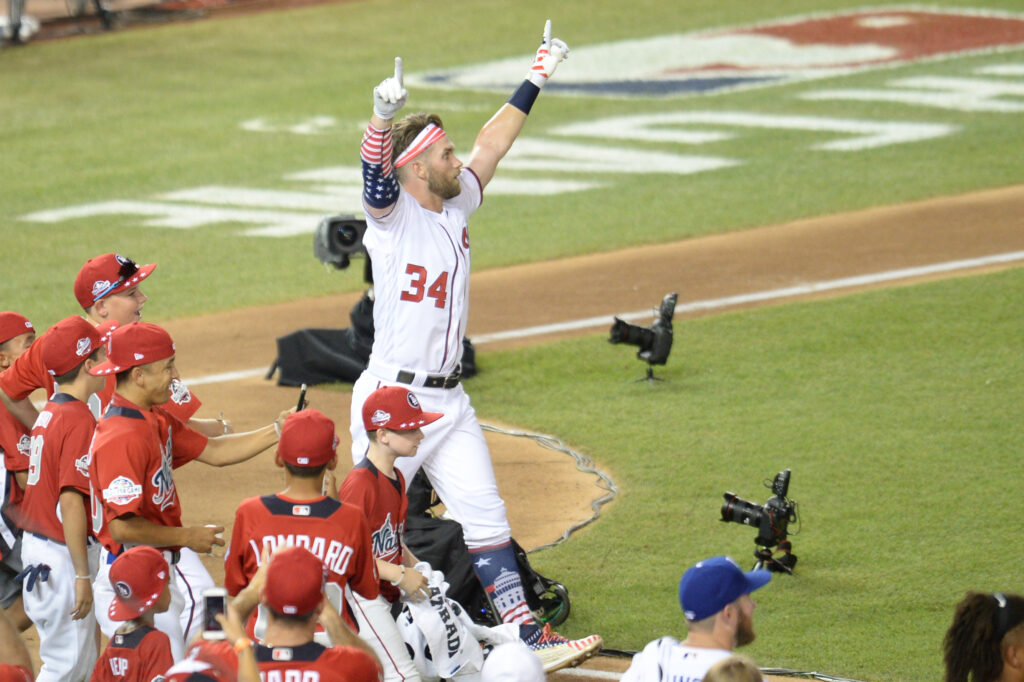
2018 Home Run Derby Champion Bryce Harper
a big rise
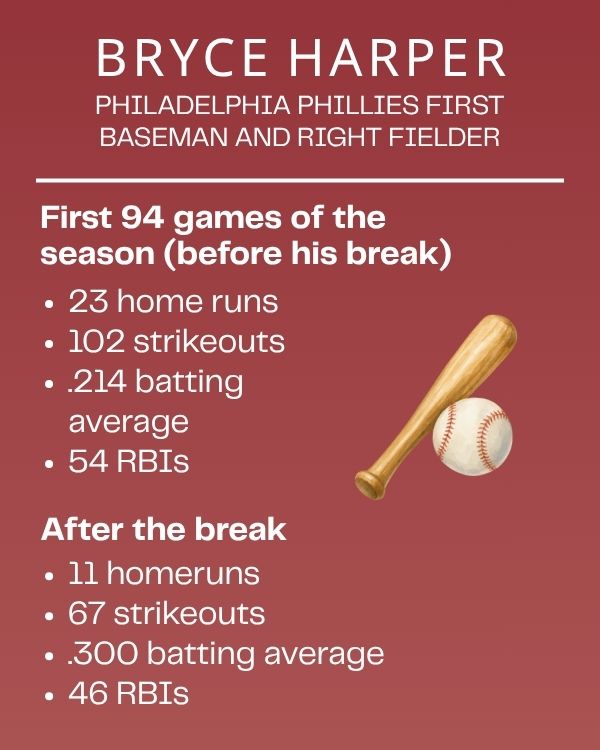 In his first 94 games of 2018, Harper had a .214 batting average with 102 strikeouts, 23 home runs and 54 RBIs.
Harper rose a remarkable 86 points after the All-Star break—to the tune of a .300 batting average with 67 strikeouts, 11 home runs and 46 RBIs.
2017 Home Run Derby Champion Aaron Judge
historic plunge
In 84 games during his 2017 rookie season, Judge hit .329 with 30 home runs, 109 strikeouts and 66 RBIs.
But the Home Run Derby drove his chances of winning the American League Rookie of the Year award into the ground. 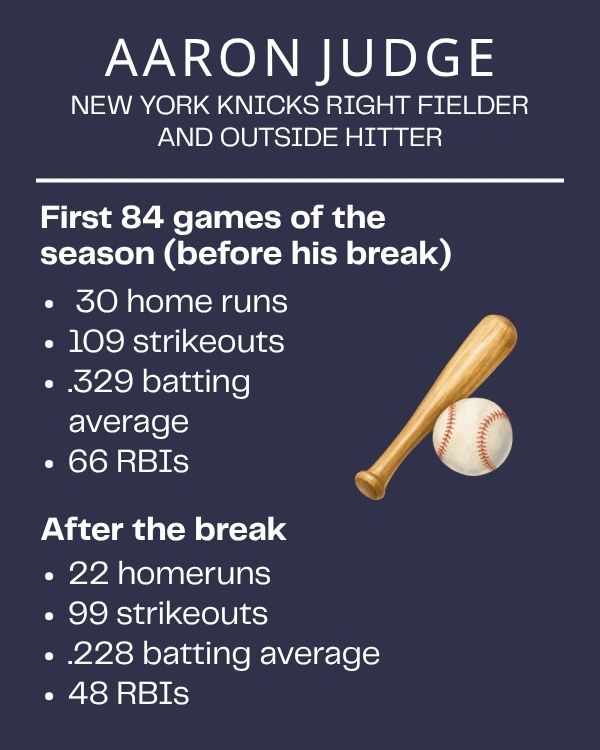
Judge fell off 101 points – that’s right, 101 points – to a miserable .228 batting average, with 22 home runs, 99 strikeouts and 48 RBIs in 71 games.
2006 Home Run Derby Champion Ryan Howard
another big rise
Howard was born and raised in St. Louis, graduating from Lafayette High School and playing for Missouri State University.
Howard was then drafted in the fifth round of the 2001 MLB draft.
In his first 84 games, Howard hit .278 with 28 home runs, 71 RBIs and 97 strikeouts.
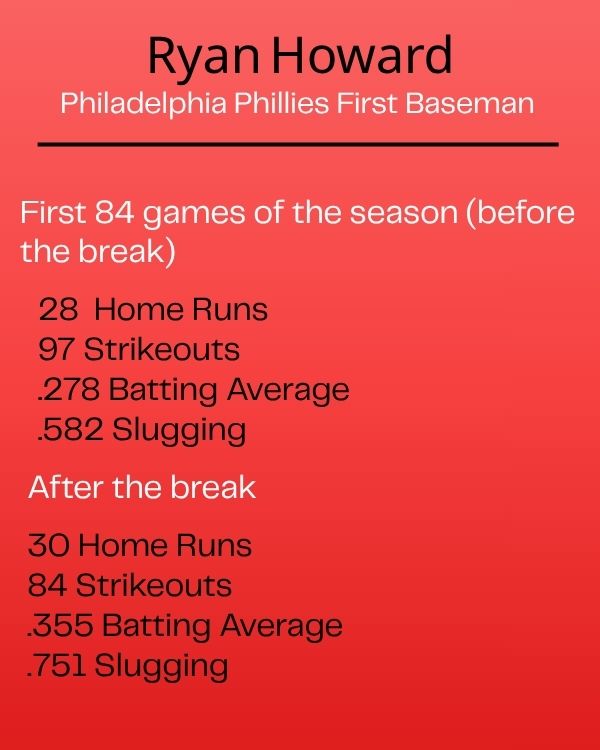 In the 75 games following the mid-year break, he skyrocketed 77 points to a .355 batting average, with 30 home runs, 78 RBIs and 84 strikeouts.
Because the Home Run Derby is essentially a high-stakes batting practice, the batters have to generate their own power and rhythm.
After the All-Star break, however, batters’ timing and rhythm could be thrown off when they faced a 100 mph four-seam fastball; the trigger cannot be pulled quickly enough.
From soft throws of a batting coach back to the reality of Big League pitchers, the post-Home Run Derby adjustment often means the difference between a strong second half and a slide to home-stretch mediocrity.
Photo courtesy of Wikimedia Commons, copyright free.